The work that has defined my impact.
A decade as a strategist for some of the largest consumer brands in the world, my experience has range from agency to in-house, from brand to media, from director to consultant, from challenger brand to Fortune 15.
Now, beyond a single discipline or definition, I primarily orchestrate complex marketing ecosystems that reliably deliver transformative business results.
Marketing strategy should
be indistinguishable from business strategy.
Where once marketing was an unattributable investment, the modern ecosystem of immediate feedback, automation, optimization, and accountability has fundamentally transformed the role of marketing. Where once marketing was about asserting an idea, the primary function of modern marketing is to drive direct business growth.
The case studies on this page reflect that belief, where success is determined by bottomline impact and not just face-value media and brand performance.

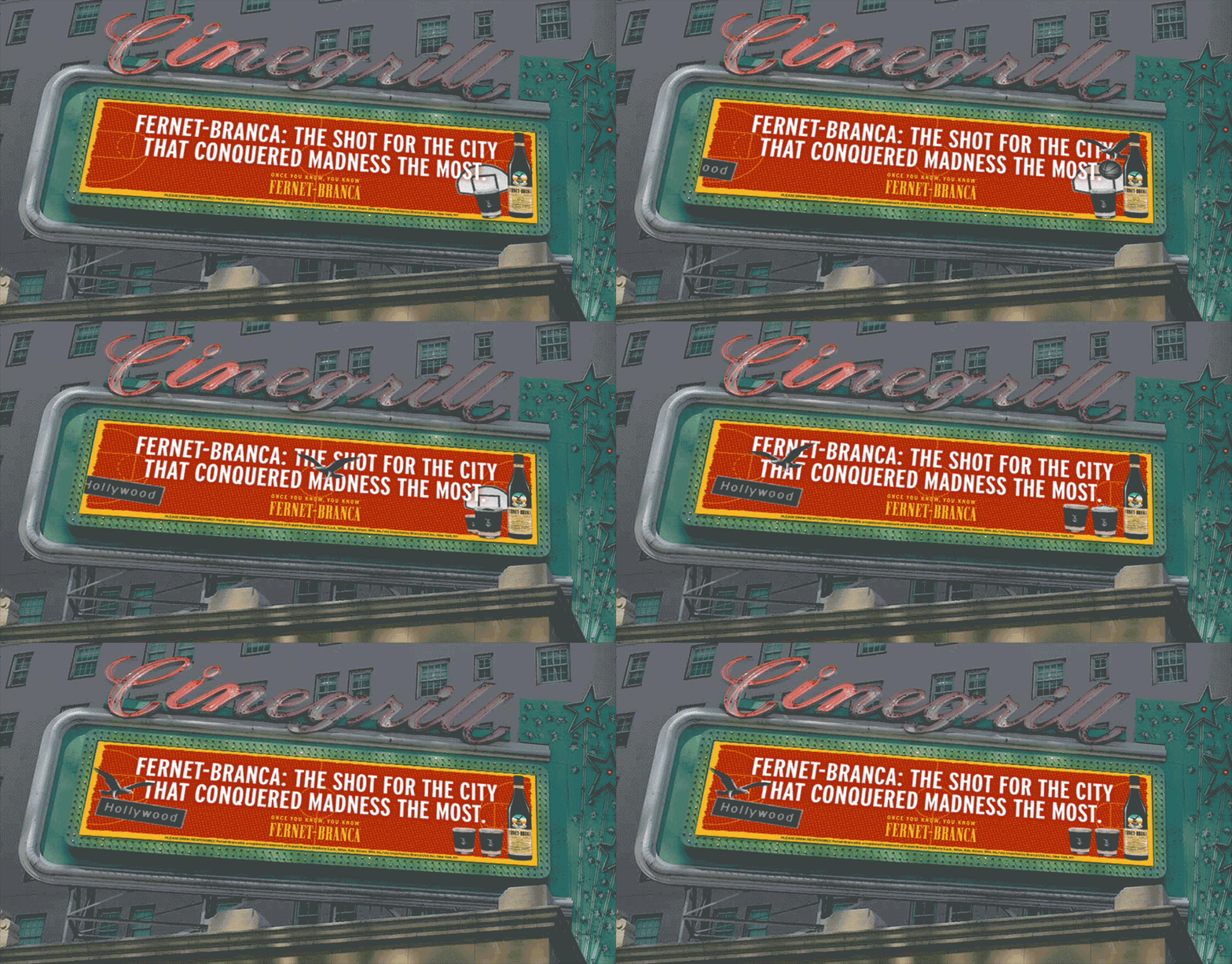
How we turned 400 bar addresses into 92 million qualified impressions.
The brief
Fernet Branca is the coolest brand you've likely never heard of. The uniquely bitter shot is impossible to describe. While it has earned its reputation as the bartender's handshake, unfortunately that niche bar-fly audience isn't large enough to offer a path to meaningful growth in market share.
To grow the footprint in the US, we needed to deliver a repeatable, scalable, 360° campaign model, designed to provoke a larger base of prospects into seeking Fernet out at the bar. Specifically, we needed to activate this plan during March Madness, one of the most oversaturated, promotion-heavy moments in American sports.
"We don't win on product education. We win on provocation to trial."The insight
Traditional media targeting is waste. Even the most sophisticated DMA-level plan still pays to reach the vast majority of a market that will never walk into a Fernet-serving bar. For a niche spirits brand with a trial-dependent growth model, “reach the market” is the wrong unit of targeting. The right unit is reach the people who are actually going to be in front of the bottle.
The brand was already invested in a bar-level promotional strategy, supporting bars with free on-premise marketing materials (through sub-boxes full of Fernet branded March Madness swag). We knew that if we could own the top-of-mind awareness and brand recall, that the materials in bar would more efficiently convert new prospects to trial.
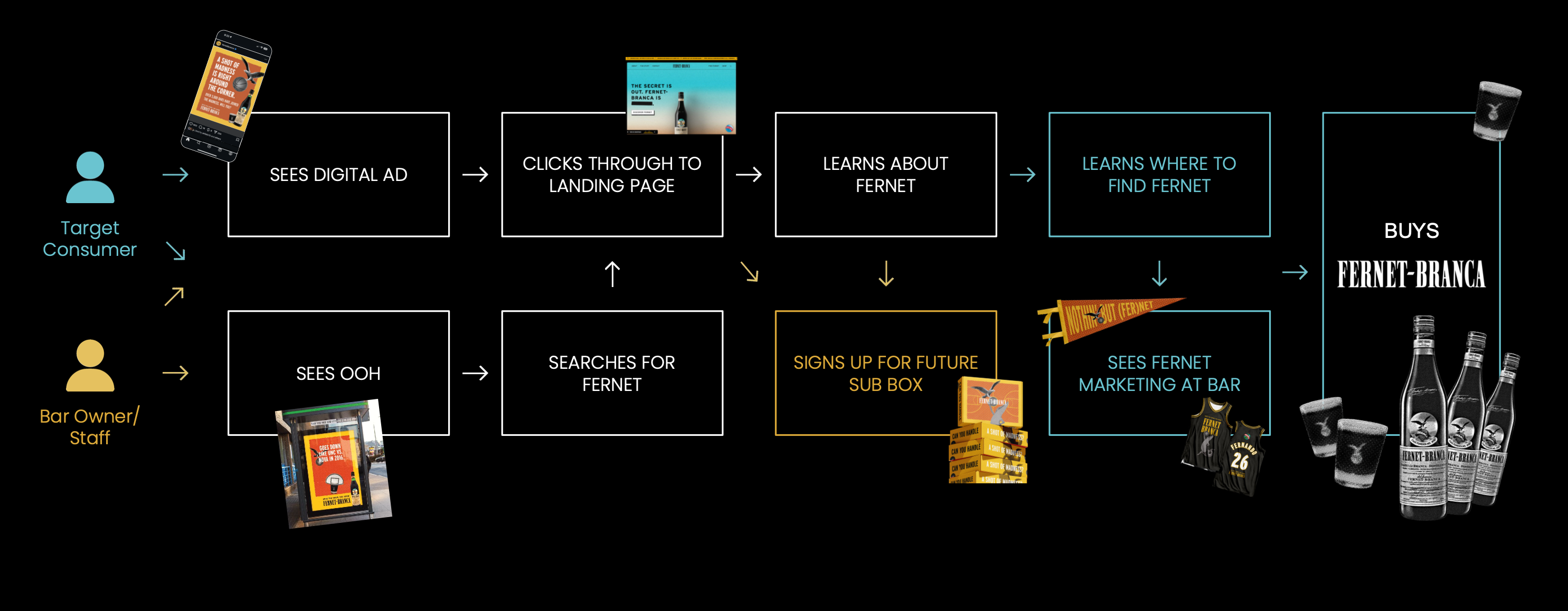
Leveraging Placer.AI – a tool that processes anonymized cell-phone location data to deliver foot-traffic based demographic detail at the address level – we plugged in the bars in our target markets responsible for the greatest Fernet depletions, and pulled back two outputs: a density profile of the audience that frequents those exact venues, and a geographic footprint we could conquest against.
We built a contesting media model to target exactly the people who already walk into the bars where we know Fernet is being poured. Every dollar reaches a person who has a statistically meaningful chance of encountering the bottle in person throughout March Madness. Zero-waste by design. Repeatable against any cultural moment.
The campaign
Our campaign line, “Can you handle a shot of madness?” beyond the clear March Madness cues, is intentionally written to be a provocation. Our creative approach for the campaign was to take that challenge, and modify it contextually to the markets we activated in. For every market it was clear that we weren’t just speaking about March Madness, but about each market’s (down to the neighborhood level) historical relationship with the tournament.
To conquest our target in these markets, we activated a complete 360 ecosystem including: CTV + DOOH for premium reach. Meta + TikTok + YouTube for efficient awareness at scale. Display + paid search as conversion-layer capture. All driving to unique per-market, feature-rich landing pages to answer “what is a shot of madness?” and show users the best venues around them to seek out Fernet.
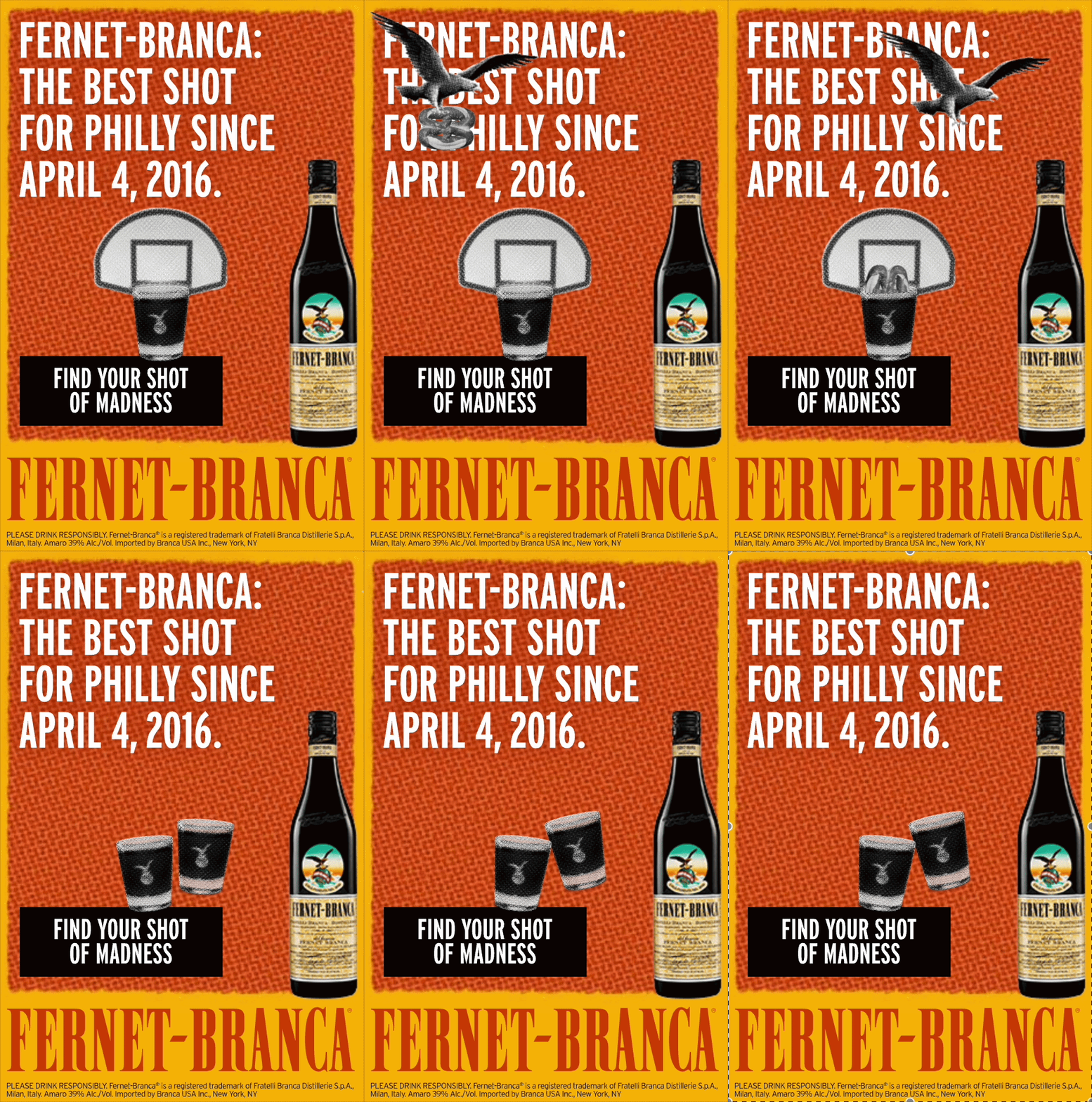
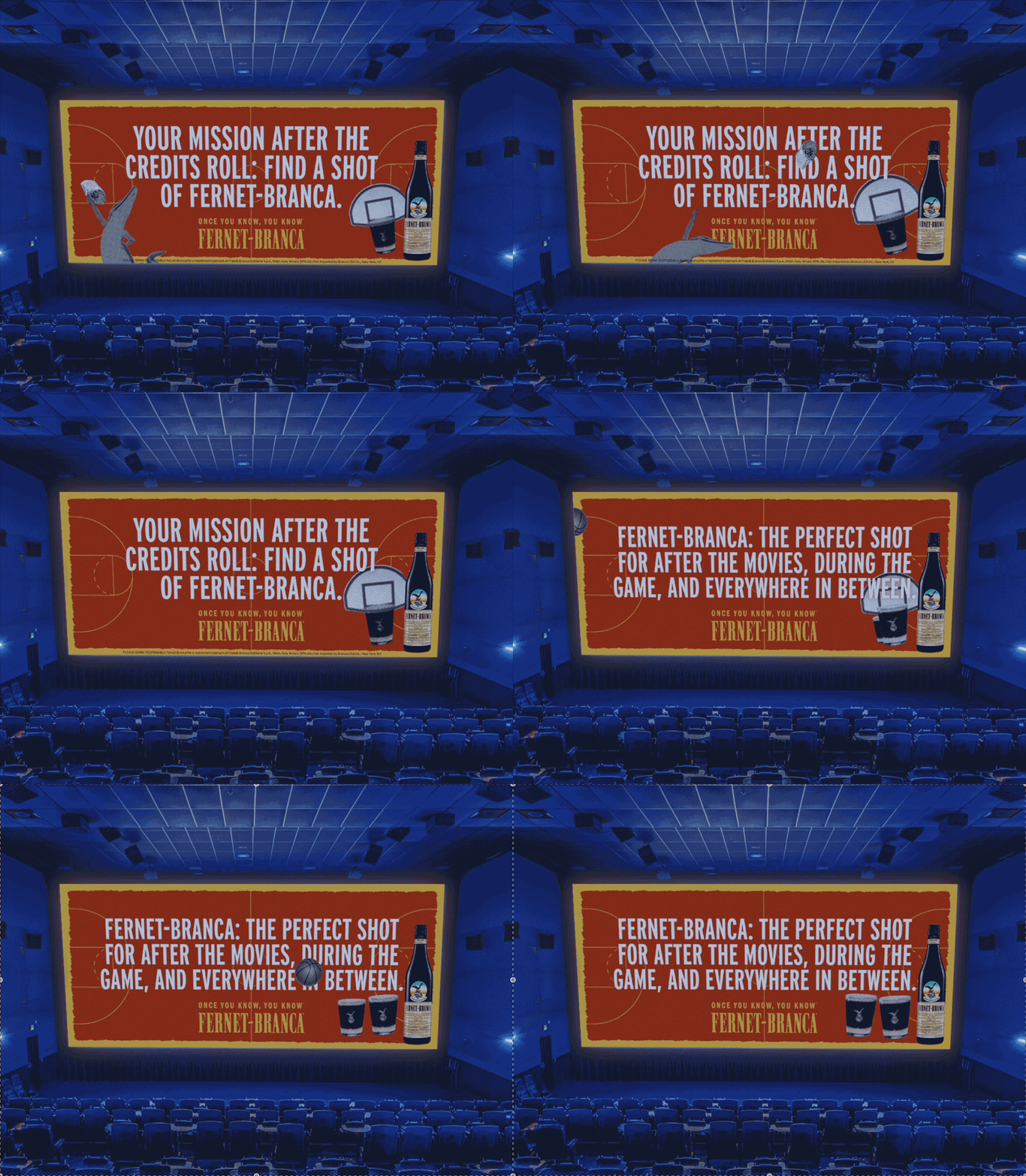
CREATIVE ECOSYSTEM · PER-MARKET VERSIONING (PHILADELPHIA DISPLAY · SAN FRANCISCO CINEMA)
THE EXECUTION
If the strategy was to conquest our target with high reach and high frequency, it is inarguable that we succeeded in proving the model. We delivered 92.8 million impressions at a $6.07 CPM — 28% over plan on inventory, ahead of target on efficiency, and significantly beating channel and industry CPM expectations given the seasonality and tournament influence on media. Additionally, we drove 100,907 new users (+943.7%) to the site YoY.
Every dollar reached further than the category norm, against a more qualified audience, and created the conditions for the next walk-into-a-bar conversion.
"Fernet has always been bold, and now our marketing is matching that energy." — Chris Watt · CEO, Branca USA
How we built a department function and 360 campaign simultaneously.
The brief
X Games was acquired by MSP Capital from ESPN with a directive to depart from being a free broadcast product, to become an independently profitable event and media business. The organization knew how to produce and broadcast an event. It had no muscle memory for brand marketing, ticket sales (the X Games were historically free to attend), or the full commercial funnel.
The brief wasn't a campaign. It was everything. Aging high-awareness brand with rapidly deteriorating cultural relevance. Ten-plus ticket tiers to sell without final event details. A dozen internal and external partners needing alignment. An Olympics + election year compressing paid media. The smallest viable budget. Six months away from the event with no previous planning.
"The only way to win was to build the plane while it flew at Mach 11."The approach
Considering our constraints, a conventional campaign process and approach was impossible. Though we still needed a campaign, it required the flexibility to check a lot of boxes: it needed to be a narrative that could be produced on a rolling basis, told in chapters, refreshed often, executed modularly across every partner to the X Games (of which there were dozens) without going through a central creative pipeline.
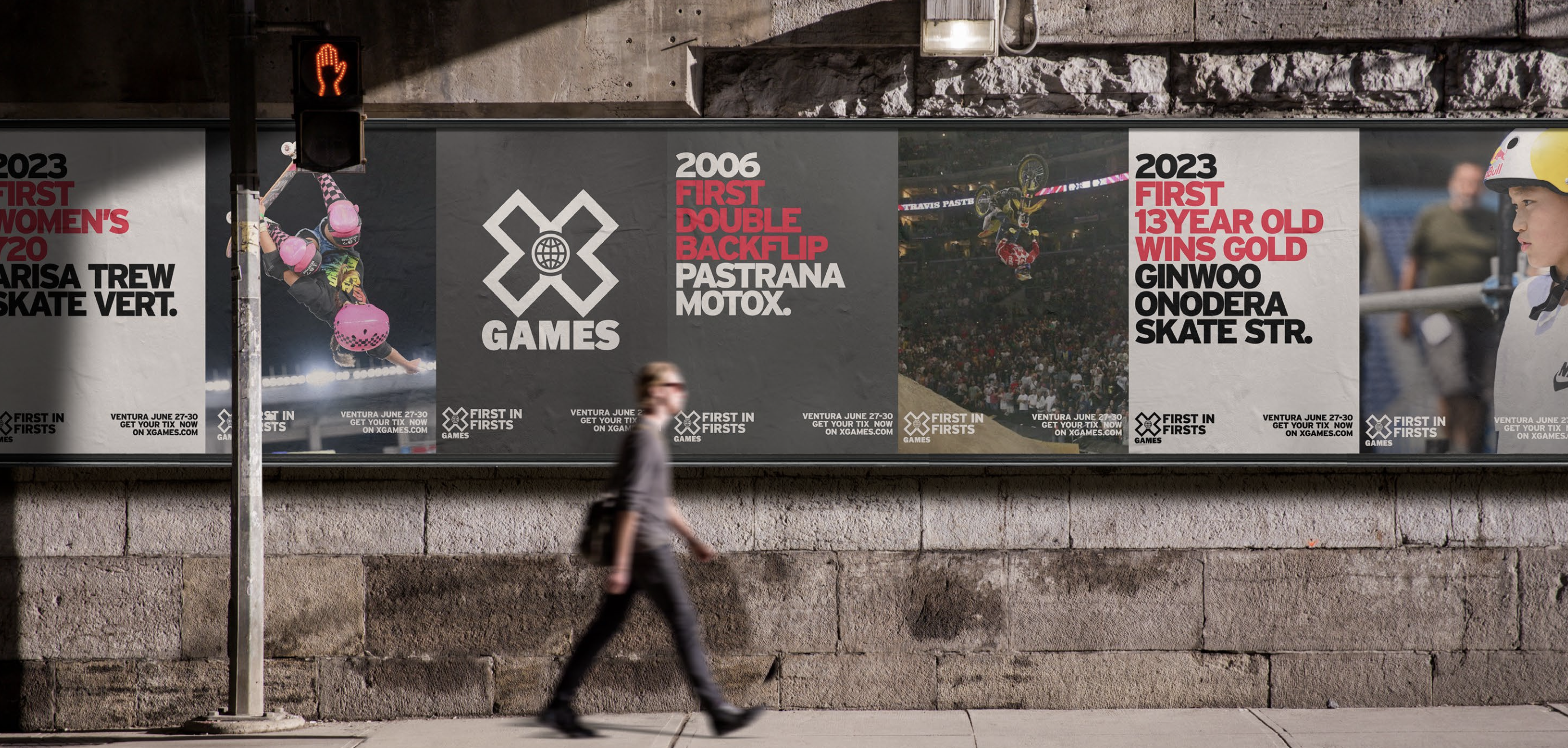
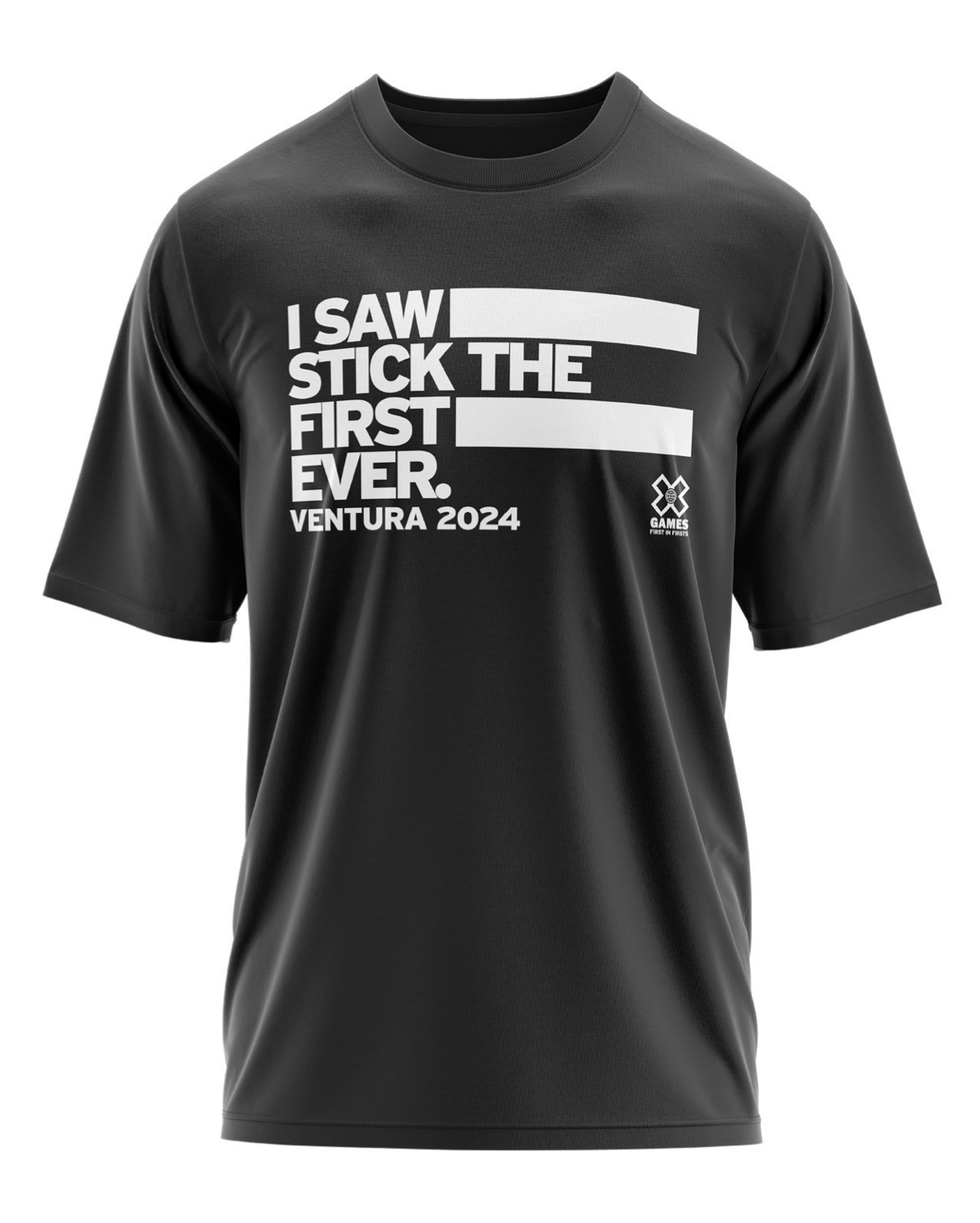
If we were going to convince a groundswell of fans to buy tickets despite the challenging moment for the brand, we needed to set expectations for what audiences could expect at Ventura. The campaign idea was grounded in leveraging X Games’ unrivaled history of world firsts. To simultaneously generate hype for the event and renew relevance for the brand, we contrasted the firsts of the last few years with those that happened over the full 30 year history of the X Games. Our campaign gave us the ability to showcase the rising athletes changing the game, alongside the legends and moments that will live forever.
THE EXECUTION
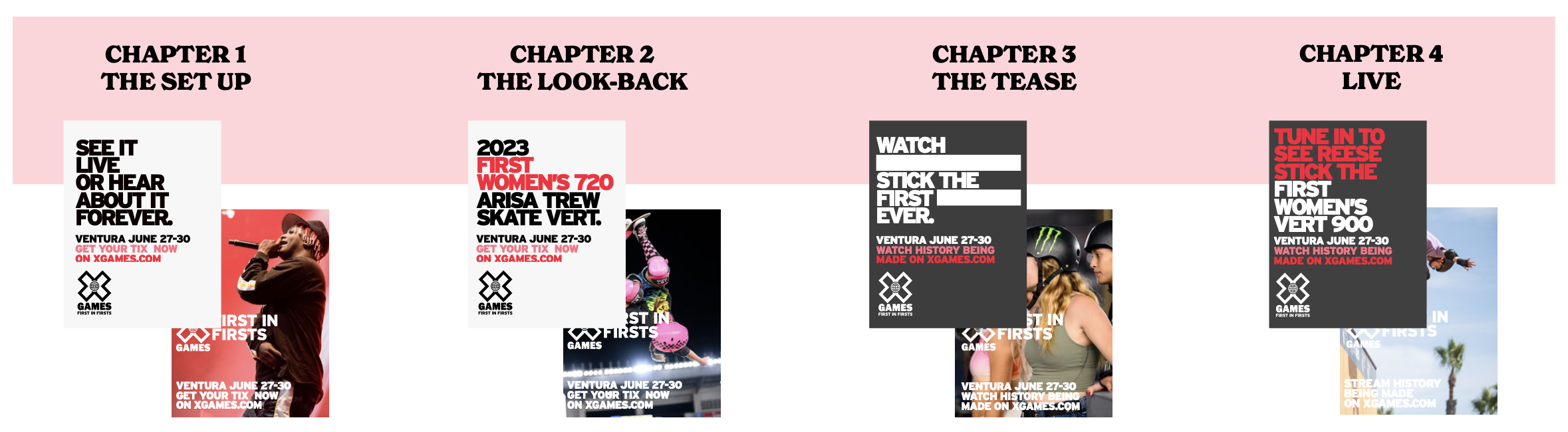
'First in firsts' was split into four chapters aligned to ticketing initiatives. The first for the announcement and initial ticket push, the second to sustain the bulk of the media buy, the third for the final inventory push before the event, and the fourth for driving further engagement during the event.
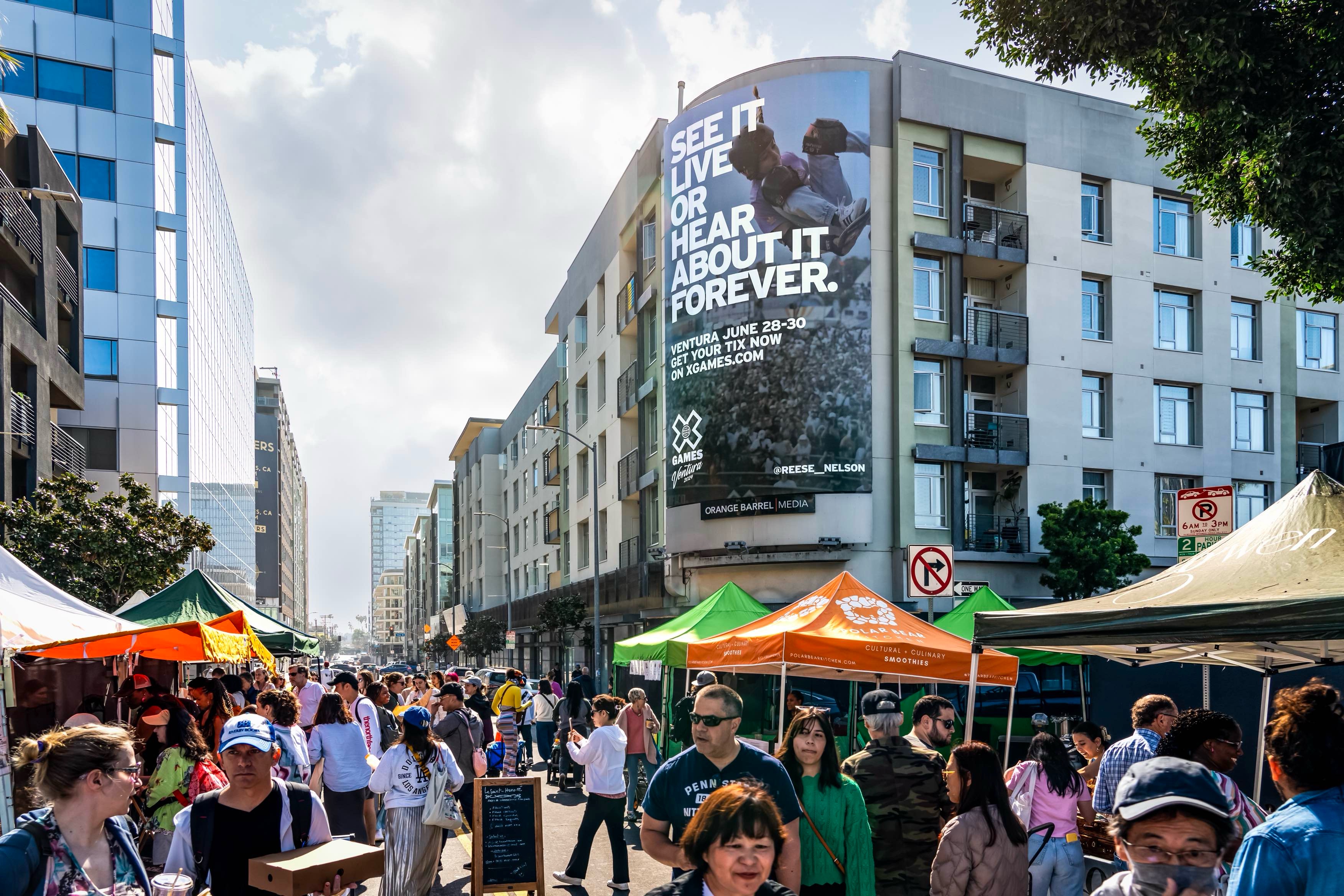
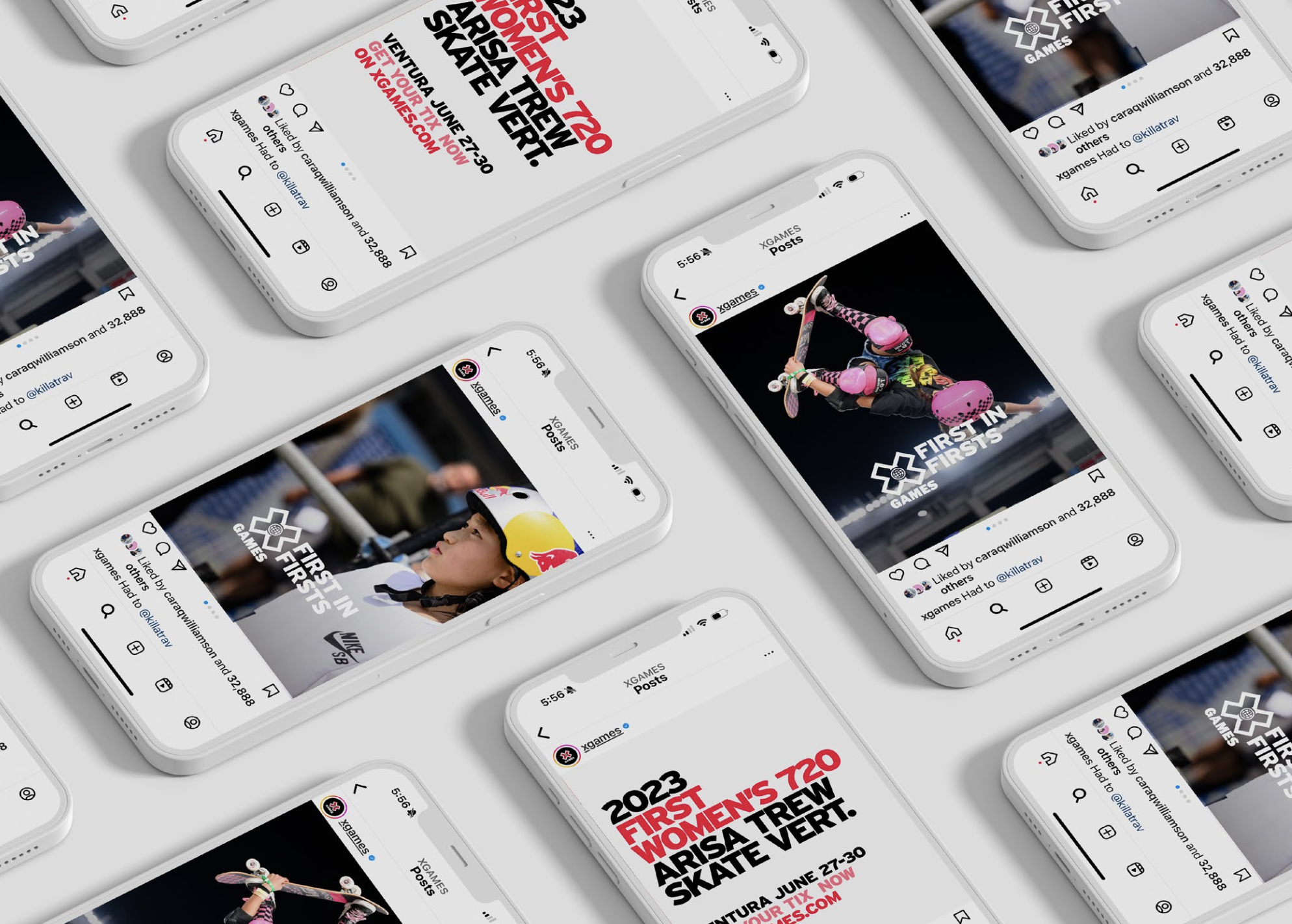
The execution was reliant on a modular toolkit containing: pre-approved copy, imagery, videos, and asset templates across all standard media sizes that any partner (from our paid agencies to local in-kind partners) could produce for themselves.
We also depended on live-ops agility. Including daily IAT feedback loops permitting us the ability to action on time-dependent opportunities — from paid media optimization, to unsold and discounted OOH inventory — immediately.

THE OUTCOME
Beyond the bottomline impact (60K+ tickets sold, extraordinary viewership growth, etc.), Ventura lived up to the campaign's promise. Across three days, there were 16 distinct world-firsts and historic accomplishments spanning never-been-done tricks, debut medal disciplines, and all-time individual and category records.

Turning category distrust into brand loyalty.
The brief
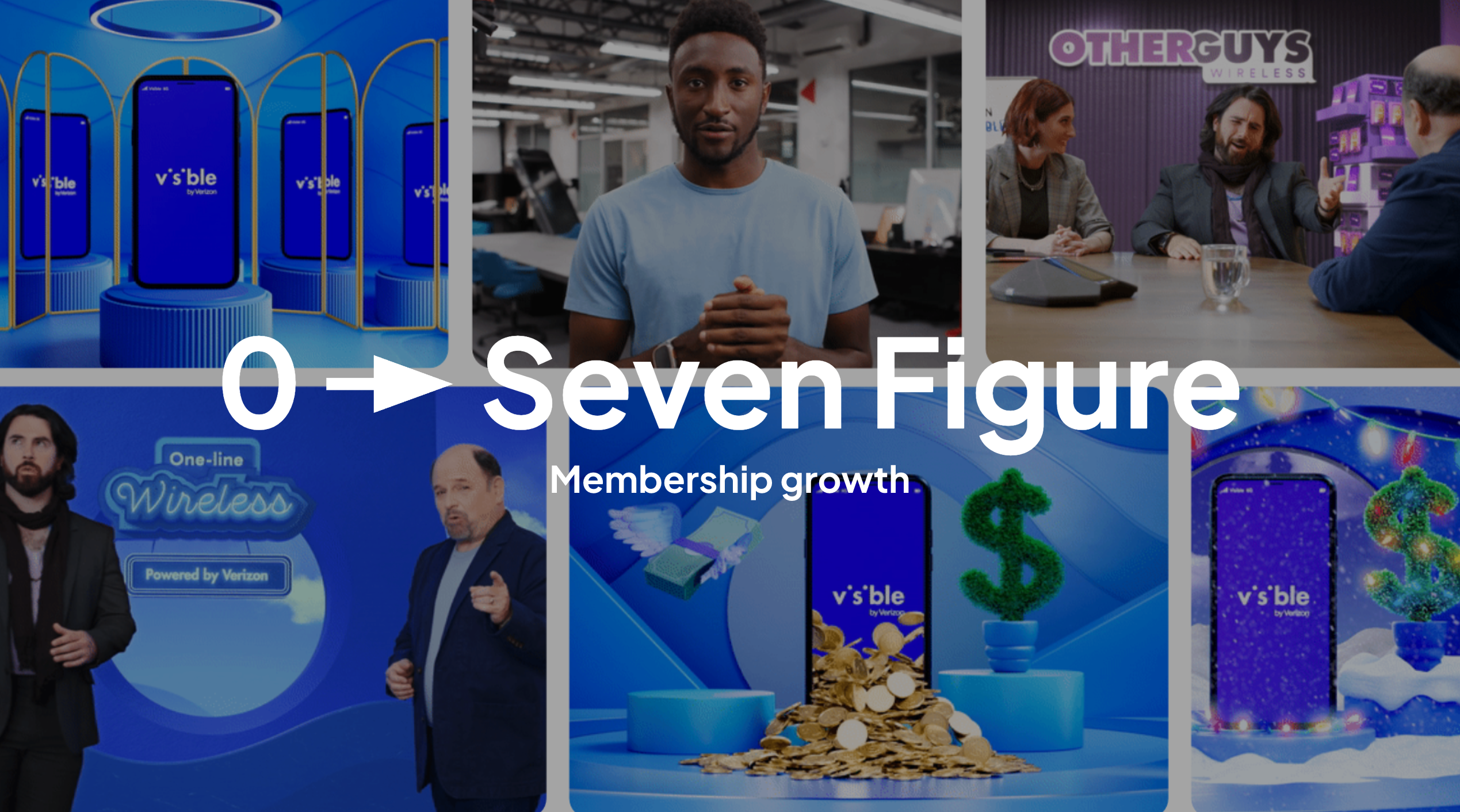
Visible is Verizon's premium single-line wireless brand — a low cost offering without compromising on quality of service. The challenge for the brand, despite the genuinely great value boiled down to two things: 1) The wireless consumer (everyone), has an extremely precise bullshit radar for this category, and are deeply skeptical of hyperbolized offers from competing services. 2) Wireless is generally a parity service, and outside of the big three (Verizon, AT&T, and T-Mobile), winning often comes down to who has the lowest cost. We had no interest in participating in the price race to the bottom, so we needed a repositioning that would allow us to differentiate a value prop that on the surface looked a lot like parity.
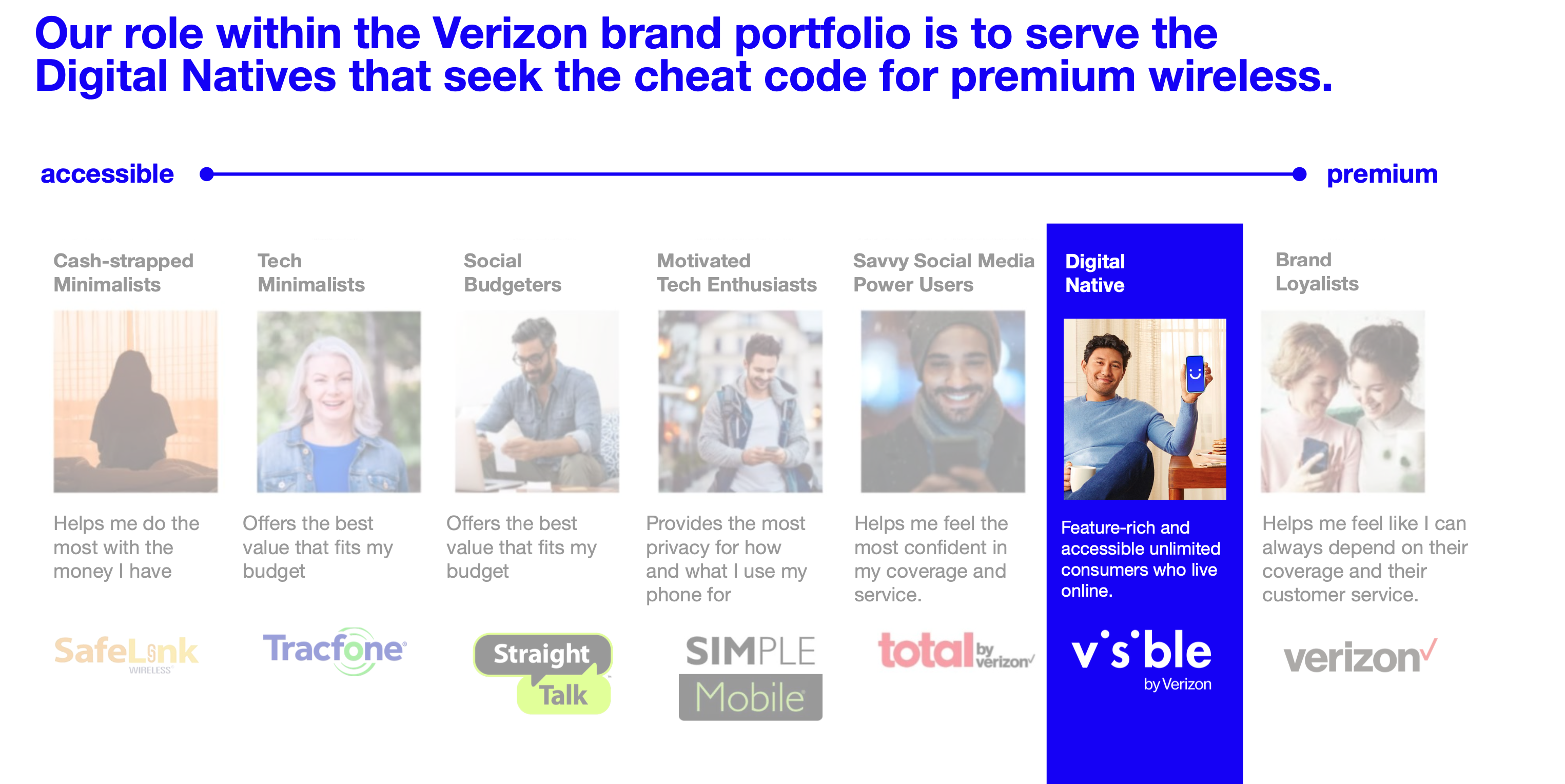
"People will always ask what's the catch. We needed an identity that would bypass that impulse entirely."Audience · Role within the Verizon portfolio
The insight
Where offering “unlimited” wireless at a stable, low monthly cost was once competitive, it isn’t anymore. The difference however between Visible and the myriad of competitors was simple: for everyone else there were paragraphs of small print and asterisks on service terms. Not us.
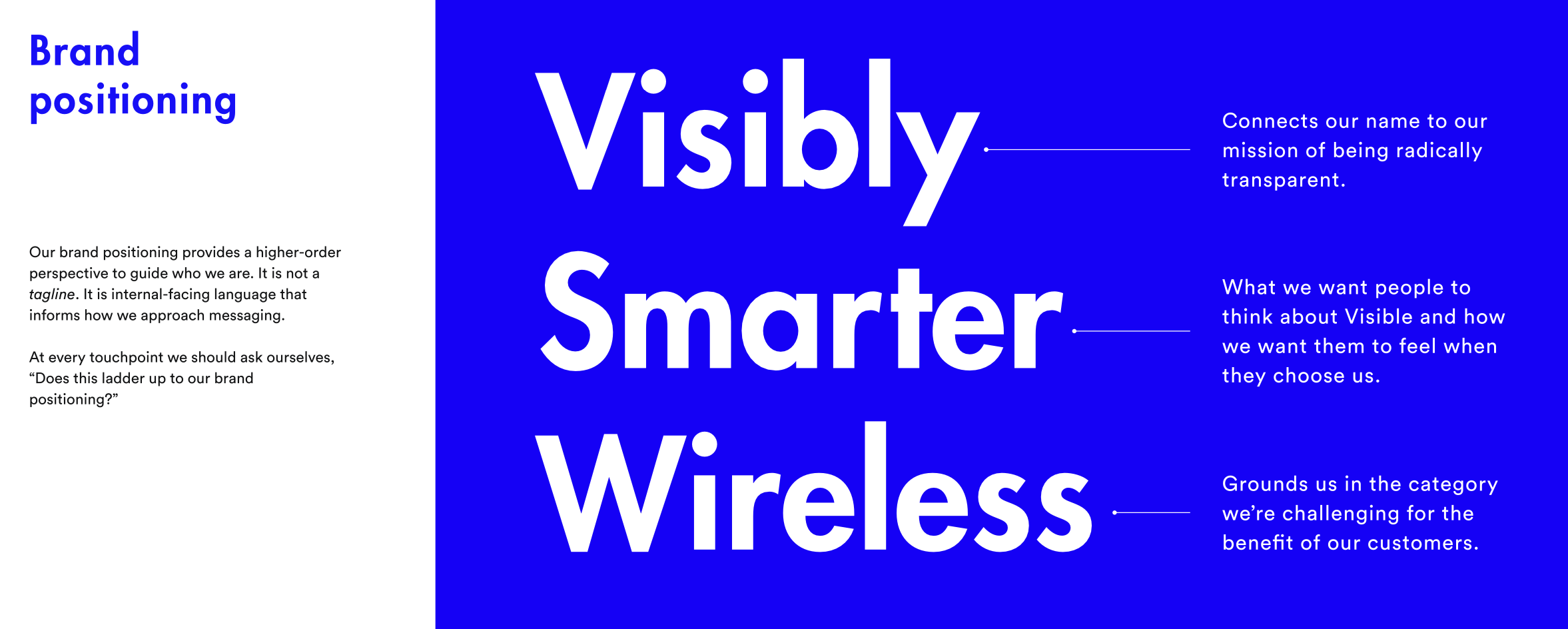
A year of positioning work produced Visibly Smarter Wireless — the idea that when you really look at the details of the plan, it’s clearly the best option for someone looking for a single-line of wireless. We wanted to be an ally to the consumer and create the narrative that opting into a lower-cost plan is a savvy decision to pay only for what you actually use, opposed to a compromise.
Our definition for “smarter” leant into the consumer’s distrust that the category had created. We became an ally to help people beat the industry. Our version of smartness was their talent for seeing through deceptive offers.
The execution
In this category especially, consumers are highly resistant to a traditional marketing approach. Our new positioning was created explicitly to bypass the immediate turn-off that came with the marketing in the industry. That followed a few specific creative principles:
- Substantiation with swagger. Factual about the offer, upfront about what it isn't, attitude of a brand with nothing to lose.
- Blue-dominant visual system. Smaller media budget than the big three; visual dominance of the color boosts recall without more spend.
- “Blue World” 3D aesthetic. Digital-product, digital-visual. 3D imagery and rendering represent modernity native to the brand.
The work needed to get to the point immediately, signal modernity, and be recognizable despite the 1x20 frequency ratio relative to our competitors.
The outcome
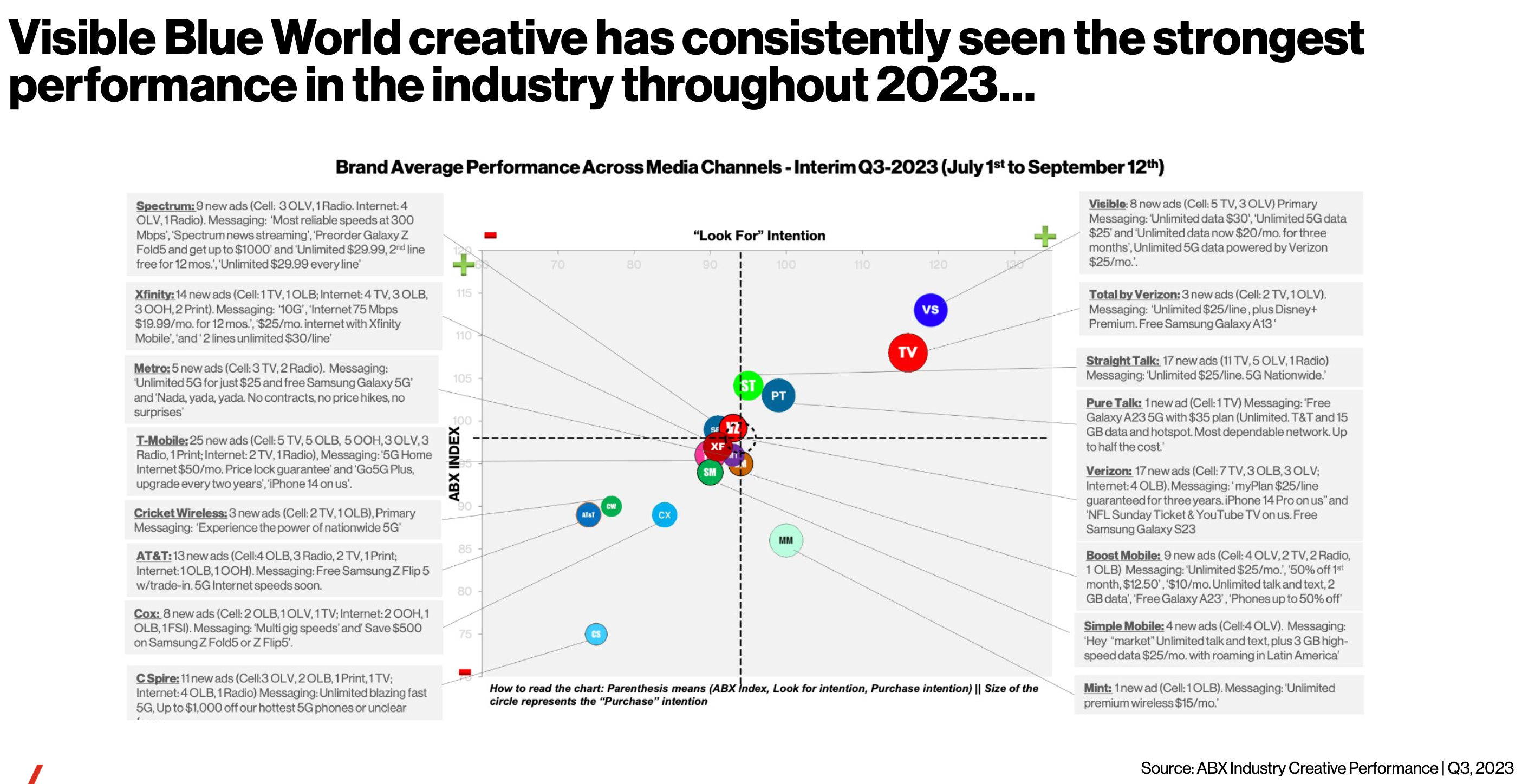
Immediately upon launch, our work became the most effective marketing in the wireless industry — significantly outperforming the big three. More importantly, after six years of steady growth, our repositioning marked a definitive spike in signups, achieving hockey stick growth and pushing total active subscribers into seven figures.
Subsequent campaigns went 5x platinum with the Muse Awards, and the positioning continues to drive the brand forward today.

Choosing the audience Denon wasn't thinking about.
The brief
Denon — a 110-year-old revered Japanese HiFi brand — relying on their reputation, had never invested in dedicated consumer-facing branding. Come 2022, they decided to invest in a net-new product category for the brand, wireless home speakers. Significantly disadvantaged by being late to a saturated global home-audio category with a site of products irrelevant to their core audience, we needed to:
- Execute a global segmentation study to identify an underserved consumer segment,
- Build a brand that was appealing to a new base of home audio consumers without alienating their HiFi base.
- Ensure scalability across the US, UK, German, Chinese, and Japanese markets.
The insight
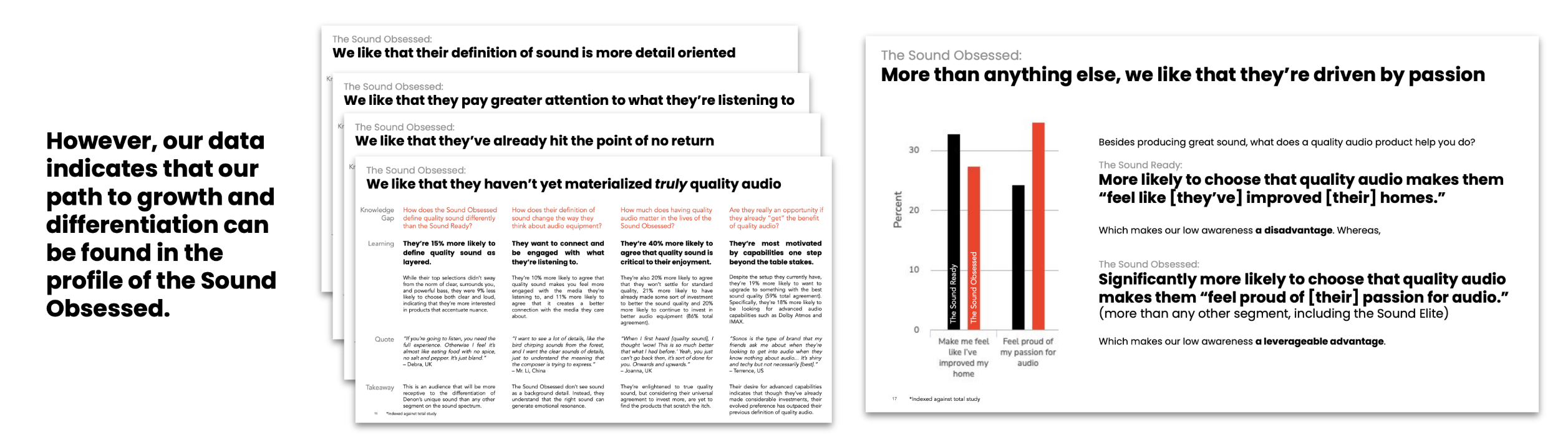
Our breakthrough came from segmenting by how people defined quality sound, not by how much they spent on it. Denon initially planned to target the first-investment buyer (the person buying their first piece of quality audio equipment). That segment defined quality through tangible qualities — bass, filling space, home improvement — which every competitor was already fighting over. The trade-up buyer (one investment in, and looking to deepen their experience with a better product) defined quality sound through less obvious attributes Denon's sound philosophy uniquely owned: layers, musicality, soul.
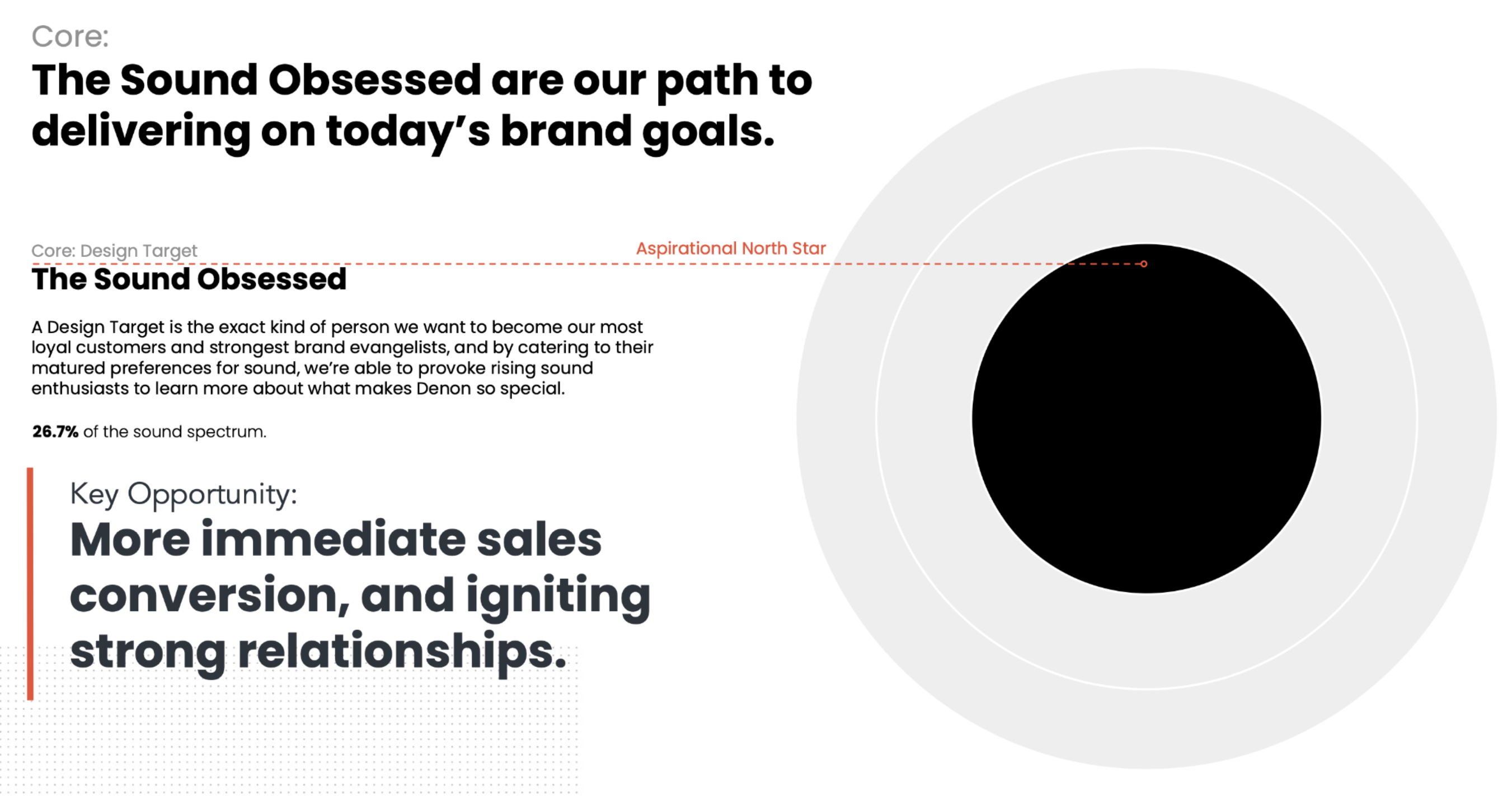
We named them the Sound Obsessed: an audio consumer premium not by price point but by their passion for audio. That reframe changed Denon's global business strategy. From targeting a generic audio segment, to having a comprehensive growth strategy focused on audio segments defined not by traditional demographics and psychographics but by their descriptions of sound – a totally proprietary metric directly resulting from the global segmentation research we had authored and executed.
The execution
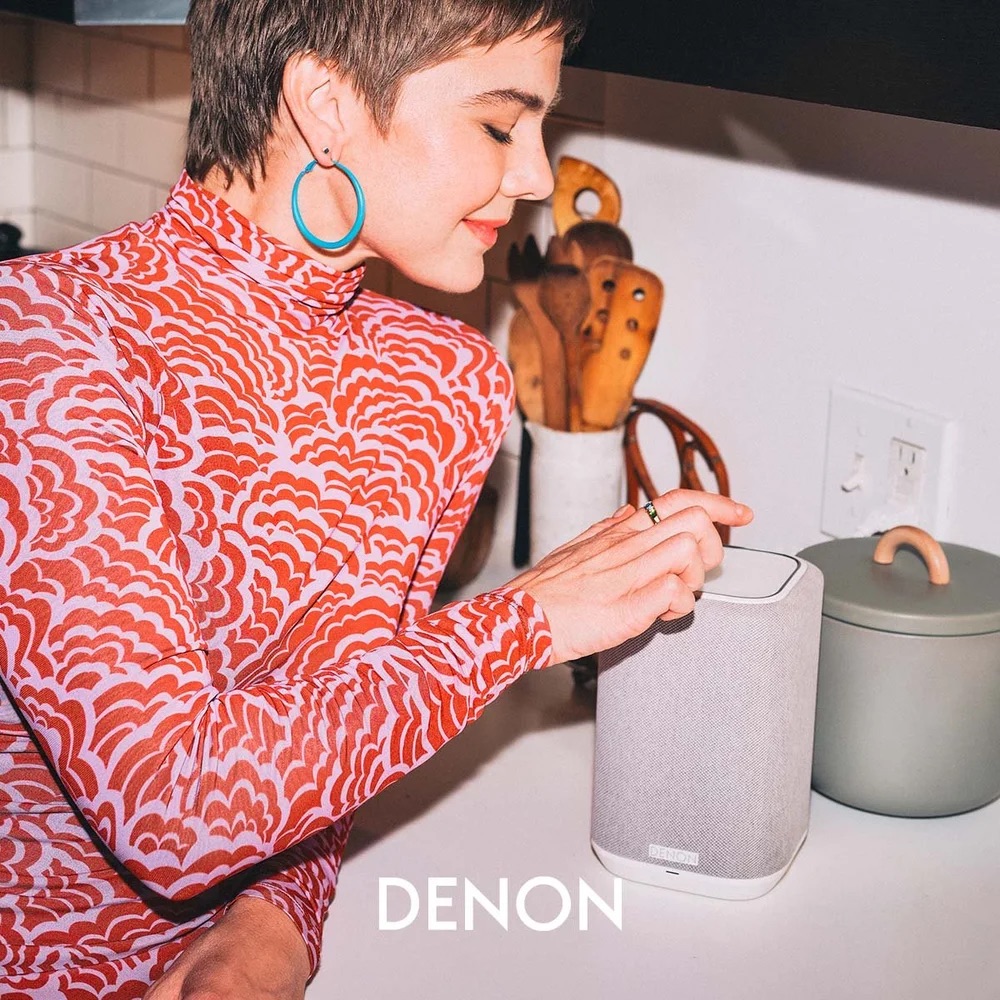
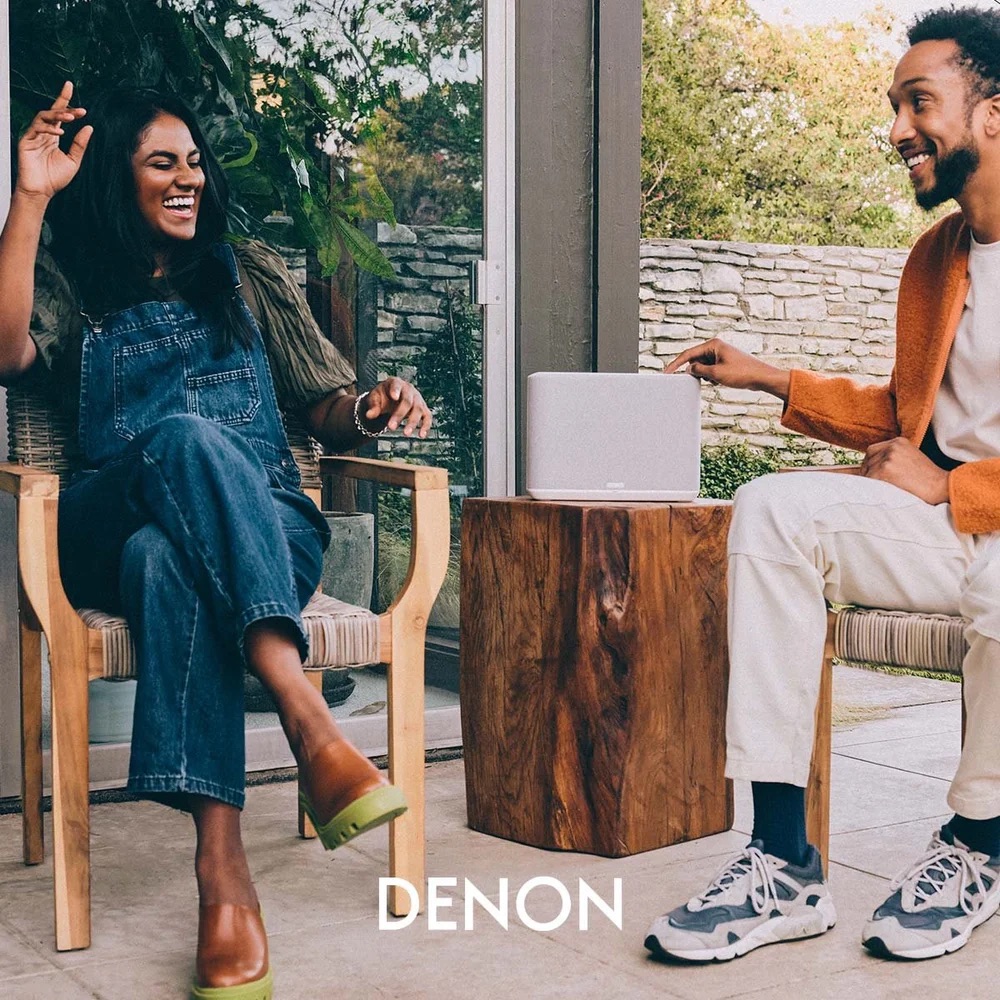
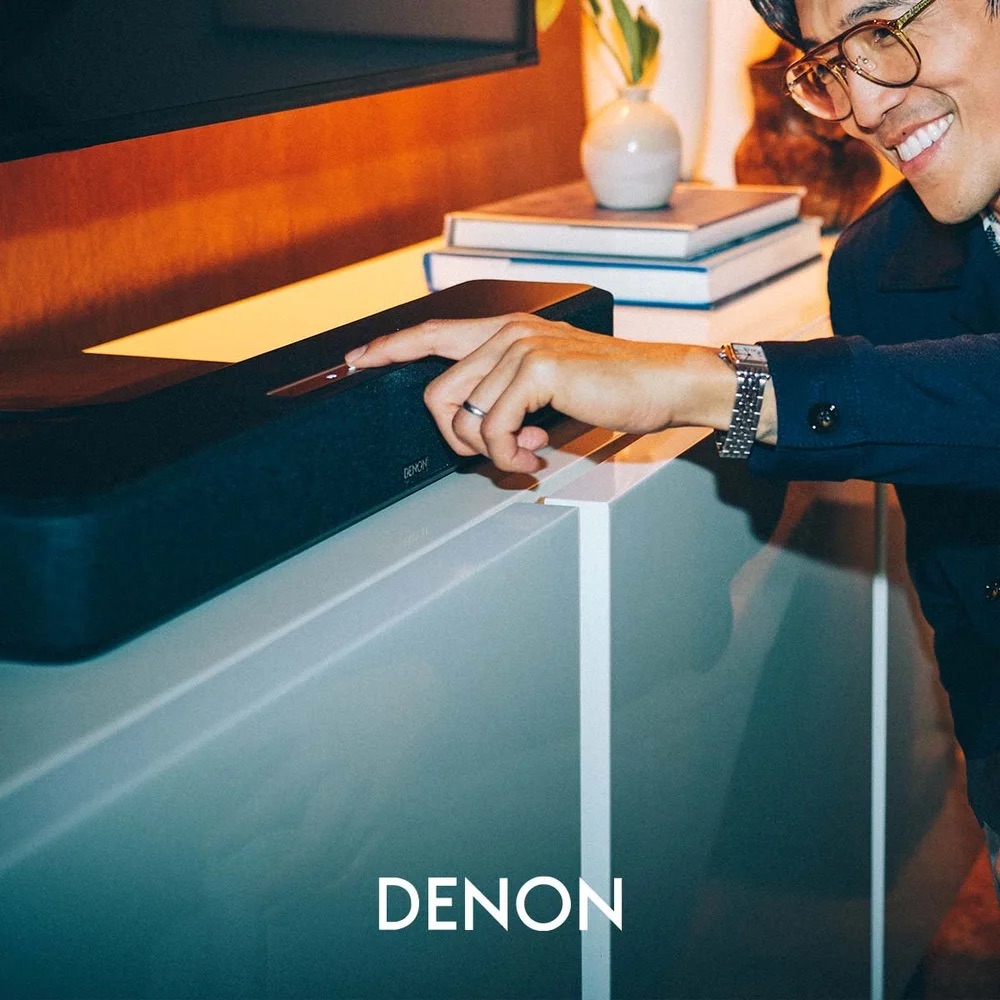
We created an ecosystem focused on depicting the Sound Obsessed and what it felt like to have a deep connection to sound. Strategically, it gave us the license to lean into deep-cut music, which tactically allowed us to license music that from a brand perspective helped us look tasteful. Our system was premium without being pretentious, and feeling-centric opposed to product-centric.
The outcome
Our initial campaign delivered historical sales growth for the business. Not only did we accomplish the greatest sales push in the company's history, but we expanded into a new base of global consumers without alienating or disturbing the historical core audience.